How to Win The Amazon Buy Box: Your Questions Answered Found

posted in: Uncategorized 0


May 17, 2019 Essential Guides Amazon,

By PricingPaul Maplesden

What is the Amazon Buy Box, how do sellers “win” it, what is Buy Box suppression, and how does the Buy Box algorithm work?

Amazon seller app on mobile device

The Amazon Buy Box is an elegant way for Amazon to keep things simple for buyers, when multiple merchants are competing to sell the same product. Just one seller is highlighted, even when a product is being offered by dozens of different vendors.

Sellers need to know how to win the Buy Box, if they want to significantly boost their sales. Although the Buy Box seems simple on the surface, it hides a complex algorithm. This is what allows Amazon to run a marketplace with millions of sellers, but have one detail page for each particular product rather than a different page for every seller offering that product.

This article answers your questions on how the Buy Box works, the impact it has, what you can do to win it, and much more. You’ll learn to optimize your strategy to boost your share of the Buy Box, get into the rotation more often, and increase your revenue.

View Top Amazon Selling Tools
What is the Amazon Buy Box?

The Buy Box is a feature on Amazon that helps customers make purchases without needing to consider exactly who they are buying from – whether it’s Amazon themselves or a marketplace seller. It’s located at the top right of every Amazon product page.

Standard Buy Box

Many products are available to buy from multiple Amazon sellers, so Amazon uses the Buy Box to select the “best” seller for each product. In the image above, EpicCo has “won” the Buy Box. This is also called being “in” the Buy Box or “owning” the Buy Box. It means that they are Amazon’s selected seller for this product, at this point in time.

When a customer clicks “Add to Cart” or “Buy Now”, the merchant who is in the Buy Box at that moment automatically wins the sale. The customer can expect Amazon to have chosen a seller who provides a competitive price, rapid delivery, strong customer service and various other factors that will help ensure their satisfaction.

Most sales on Amazon come through the Buy Box, so sellers who appear there regularly will make a lot more sales than those who are rarely featured. Over time, this can dramatically improve product sales.
Can sellers who are not in the Buy Box make any sales?

Below the Buy Box, you will find a box called “Other Sellers on Amazon”, whenever there is more than one seller of a particular product.

Other Sellers on Amazon

This is how merchants who are not in the Buy Box can gain some sales, but only if the buyer clicks the link to see the list of other sellers. Only a small proportion of sales on Amazon happen this way.

The Buy Box is even more important for customers buying on a smartphone, as it appears directly below the product image and price. The “other sellers” box on mobile browsers, and the Amazon app, is even less prominent than on computers with large screens.

The takeaway is that sellers must win the Buy Box if they want to capture a significant share of sales. Understanding what it takes to do that should be a priority for all third-party sellers of competitive products on the Amazon marketplace.
What percentage of sales go through the Buy Box?

Sellers very often report that their sales increase dramatically when they are in the Buy Box for a particular product. But exactly how many sales happen because a customer clicked on one of the Buy Box buttons, versus the link to view other sellers?

Various sources state that 82% of sales go through the Amazon Buy Box. This figure originates from a 2013 report by software company Feedvisor. As this was a third-party study, we cannot assume this number is correct. The fact is that only Amazon itself knows what proportion of sales actually go through the Buy Box.

What we can say with confidence is that the percentage of sales that go through the Buy Box is very high. It is common sense that most shoppers will take the most convenient path and use the Buy Box to make a purchase, while only a minority of buyers will go to the trouble of researching other sellers to try and save a few extra cents.

The increase in mobile shopping in recent years is likely to have increased the proportion of sales that go through the Buy Box, as the Buy Box is even more prominent on mobile browsers and the Amazon app.
Is the Buy Box relevant for all Amazon sellers?

While the Buy Box appears on all product pages, it only really matters to sellers of “competitive products”. In other words, sellers of items which have other merchants offering that exact product as well.

For example, a pack of Energizer AA lithium batteries with ASIN B071D87WPV currently has 40 merchants competing for the Buy Box.

Amazon product 40 offers

Note that Amazon itself is one of the sellers competing, as well as Amazon-owned accounts such as Amazon Warehouse Deals. You can compete with Amazon to win the Buy Box, but it’s usually more difficult to beat than a third-party seller. There’s more on that in the Buy Box myths at the end of this article.

Products that only have one seller still have a Buy Box, but you do not have to compete with anyone else to win it (however it can be “suppressed” if Amazon doesn’t think your offer is good enough).

Typical examples of products with only one seller include:

Private label products sold under your unique brand.
Direct-to-consumer brands sold only by the manufacturer or an exclusive partner.

Many sellers have turned to creating their own private label own products to avoid having to compete for the Buy Box.
How can I win the Buy Box?

If you are the only seller of a particular product, you will automatically win the Buy Box.

Otherwise, it’s usual for the Buy Box to be shared between multiple sellers rather than owned by the same seller 100% of the time. To win a share of the Buy Box you must:

Be eligible to win the Buy Box
Be chosen as the winner by the Buy Box algorithm

There is more information on eligibility and the Buy Box algorithm below, but here’s a quick summary.
Eligibility

To be eligible to win the Buy Box for your products you need:

A Professional selling account
Good performance metrics
Sufficient order volume

Algorithm

Amazon’s algorithm takes into account the following factors to decide on the Buy Box winner.
Factor Importance How to improve
Item qualifies for Prime High Use Fulfillment by Amazon or Seller Fulfilled Prime
Total price to customer High Use automatic repricing software, keep shipping costs down
Shipping time

(for non-FBA items)
Medium Optimize your fulfillment and delivery processes
Performance metrics Medium Monitor and improve your Amazon metrics
Seller feedback Medium Reduce potential complaints, deal with actual complaints effectively
Consistent stock availability Low Use sales forecasting software, take account of supplier lead times, maintain safety stock

Note that Amazon does not publicly disclose how its algorithms work. But the Buy Box has been studied quite extensively, so we can have a high degree of confidence around the factors above.
How does Buy Box eligibility work in detail?

There are certain criteria you need to meet as a seller to be considered for the Buy Box.

You must have a professional selling account, with a paid monthly subscription of $39.99. Individual selling accounts do not qualify.
Your Order Defect Rate, Cancellation Rate, and Late Shipment Rate performance metrics must be in good standing.
You need to have a high enough order volume, which varies depending on the categories you sell in.

You can check eligibility at a product level in Seller Central. The “Buy Box Eligible” column is not shown by default so needs to be turned on as follows:

Select “Manage Inventory”
Then select “Preferences”
Finally select “Buy Box Eligible”
Save changes

Now the relevant inventory reports will include a Buy Box Eligible column.

Buy Box Eligible column

Note that while Buy Box eligibility is mostly decided on a seller level, the order volume requirements vary by category so it is possible to be eligible for some but not all of your products.
What factors are used in the Buy Box algorithm?

The Amazon Buy Box algorithm takes several areas into account. Here’s a summary:
Prime

If your product offer has the Prime badge you will get a big boost in the Buy Box. The two ways that marketplace sellers can qualify for Prime are:

Using Fulfillment by Amazon (FBA)
Qualifying for and shipping under Seller Fulfilled Prime (SFP)

Signing up for FBA is one of the simplest ways to increase your chances in the Buy Box. Seller Fulfilled Prime achieves the same goal, but you must first demonstrate to Amazon that your shipping operation has consistently excellent performance.
Total price

The total price the customer pays is another factor of very high importance in winning the Buy Box. Keeping the price down by using a repricing tool and not charging for delivery can significantly increase your chances of appearing in the Buy Box.
Other factors

The factors above have the highest influence on your Buy Box placement, but there are several others that the algorithm takes into account.

Shipping time (non-FBA): If you ship items yourself, keep your handling times as short as possible. Same-day shipping is now commonplace.
Performance metrics: Unlike Buy Box eligibility, the algorithm can take into account any metric that relates to customer experience, including negative feedback rate, A-to-z guarantee claims, valid tracking rate, late shipment rate, customer response time, cancellation rate and more.
Sales volume and inventory: Selling more items, and always having products in stock is also a factor in the Buy Box algorithm.

If your items qualify for Prime and you have the lowest price, or are close to it, these factors can help push your share of the Buy Box higher than competitors.
What is a share, percentage or rotation of the Buy Box?

The Buy Box is not exclusive to one seller. Every merchant who sells the same product has a chance of appearing in the Buy Box. The number of times a seller appears in the Buy Box, versus the total number of times a product is viewed, is that seller’s “share”.

For example, if a product is viewed 100 times and you are in the Buy Box for 15 of those times, then your share is 15%.

This is also known as the “Buy Box percentage” or “rotation” and can be viewed in Seller Central.

Buy Box Percentage

The Buy Box algorithm decides which seller wins the Buy Box for a specific product at a specific time, which over time results in each seller’s percentage share.

For example, if there are five sellers of a particular item, all using FBA and with identical pricing, performance metrics, stock availability and so on, then each merchant should have a Buy Box share of exactly 20 percent.

In reality, things are never that simple. Each seller is unique and their individual factors will lead to different Buy Box shares. Amazon does seem to try and rotate the Buy Box between different sellers when there is not much difference between them, but it will weight the rotation more heavily towards the “better” sellers. The share will rarely be equal in the real world.

Note that the Buy Box will not always rotate between sellers for a particular product, and that Amazon will try to keep the Buy Box winner consistent when a shopper views the same product multiple times. You are unlikely to see the rotation by simply refreshing the product page yourself, but you might see it if you visit repeatedly an hour or more apart.

Often sellers shouldn’t aim to get exclusive access to the Buy Box, but to get the largest share that they can. It’s not a zero-sum game where one seller wins and all their competitors lose.
What is Buy Box suppression?

Buy Box suppression happens when the Buy Box does not appear on a particular product detail page, even if there are multiple merchants competing. Amazon may decide to suppress the Buy Box for reasons including:

None of the sellers are eligible for the Buy Box
The sales volume is too low
Amazon believes the price offered is too high

The third reason – the price being too high – is the one that is seen most often. What makes a price “too high”? Here are the most common reasons:

The price is higher than the manufacturer’s recommended price
Other ecommerce sites have a significantly better price
The price has jumped up quickly

A suppressed Buy Box can be identified easily, because instead of the buttons to “Add to Cart” or “Buy Now”, it has a button labeled “See All Buying Options”.

Buy Box suppression

The shopper can click “See All Buying Options” to show all the prices and sellers for this product – the offer listing page. However, the main effect of removing the usual buttons is to deter buyers from making a purchase at all. Many shoppers will have a knee-jerk reaction that the product is not available, and return to the search results to find an alternative.

This shows Amazon’s “Marketplace Fair Pricing Policy” in effect. This policy says:

Amazon regularly monitors the prices of items on our marketplaces, including shipping costs, and compares them with other prices available to our customers. If we see pricing practices on a marketplace offer that harms customer trust, Amazon can remove the Buy Box, remove the offer, suspend the ship option, or, in serious or repeated cases, suspending or terminating selling privileges

If you are eligible for the Buy Box, but the Buy Box is suppressed for a particular product, the first thing to look at is usually your price.
But that’s not what I’ve heard about the Buy Box!

The Buy Box is hugely important in determining a seller’s success of Amazon, but it is governed by computer algorithms – those mysterious, opaque systems that rule so much of our world today.

So, not surprisingly, there are several myths around the Amazon Buy Box, and we’re here to bust a few of them.
Myth 1: You can’t beat Amazon to the Buy Box

It’s true that Amazon itself often wins the Buy Box for products that it sells, but it is possible for third-party merchants to get at least a share of the rotation.

This example, on Amazon.co.uk, shows Amazon behind three marketplace sellers in the offer listing. The top seller, Kidco, is in the Buy Box on the product detail page.

Amazon losing the Buy Box

Amazon do also go out of stock sometimes, which can be another opportunity to beat them to the Buy Box.
Myth 2: The lowest price always wins the Buy Box

Price is a big factor for the Buy Box, but not the only one. The other factor of almost equal importance is having the Prime badge, either through FBA or Seller Fulfilled Prime.

This doesn’t mean that having Prime is an open license to charge high prices, but Prime items can often be priced somewhat higher than others and still win the Buy Box.

In this example, the Buy Box is being won by BMTech with a Prime-eligible offer of £278.16, even though the lowest price is £259.99. This is also another example of a marketplace seller beating Amazon to the Buy Box, with a price only one penny lower this time!

Lowest price not in the Buy Box
Myth 3: You can keep the Buy Box to yourself

There’s plenty you can do to enhance your chances of appearing in the Buy Box, but even if you’ve optimized everything, you might not get exclusive access.

The Buy Box algorithm will often give other merchants a chance to appear, especially if their price is lower than yours. It could take very aggressive pricing to win the Buy Box 100% of the time, and be more profitable overall simply to share it with others.
Myth 4: You just need to turn Buy Box eligibility on

There’s confusion is some places about Buy Box eligibility. Amazon decide if you’re eligible to appear in the Buy Box, not you.

The thing you can turn on in Seller Central is simply the Buy Box eligibility column in the reports. You aren’t turning on eligibility itself, but wouldn’t it be great if it was that easy?

Found on: https://www.webretailer.com/lean-commerce/amazon-buy-box/

58 Leading Online Marketplaces Worldwide

posted in: News 0

In “20 Leading Global B2B Exchanges,” I listed the leading global business-to-business sites to buy and sell products. In this post, I will list all major worldwide marketplaces — B2C and B2B. I have categorized the marketplaces by their home continent.

North America

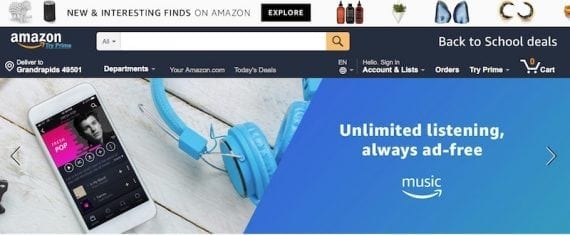
Amazon is the largest ecommerce company in the world. It operates marketplaces in 14 countries: U.S., Australia, Brazil, Canada, China, France, Germany, India, Italy, Japan, Mexico, Netherlands, Spain, and the U.K. Amazon also runs separate marketplaces for businesses, called Amazon Business.
Amazon

Amazon

Bonanza is a seller-friendly marketplace with more than 10 million items. It has no listing fees and no monthly store fees. It sells in Canada, U.K., France, India, Germany, Mexico and Spain.

Cratejoy is a marketplace for selling subscription boxes. The boxes cater to consumer interests, such as healthcare and regional affinity. The site receives roughly 30,000 monthly transactions and more than 3 million monthly page views.

eBay has sites for 24 countries: U.S., Canada, Austria, Belgium, France, Germany, Ireland, Italy, Netherlands, Poland, Spain, Switzerland, U.K., Australia, China, Hong Kong, Indonesia, Japan, Malaysia, Philippines, Singapore, Taiwan, Thailand, and Vietnam.

Etsy is a global marketplace for creative, handmade products. Etsy focuses on helping the community of sellers become successful by making it easy and cheap to list products and start selling. The site serves roughly 30 million customers annually.

Jet is owned by Walmart, but it operates as an independent site. It offers sellers a rules engine to optimize their profitability. The site receives millions of daily visitors.

Newegg is a global electronics marketplace that has been in business for 17 years. It has tens of millions of customers and sells products in 50 countries.

Reverb is a marketplace for musicians to buy, sell, and learn about new, used, vintage and handmade music gear. It connects millions of people to musical products and inspiration. Roughly 80 million worldwide users visit the site annually.

Walmart started accepting online third-party sellers in 2016. Since then thousands have signed up. The site sells more than 1 million products; sellers can list items for free.

Wayfair is a marketplace focused on home décor and home furnishings. It lists more than 10 million products from over 10,000 suppliers.

Wish is a B2C marketplace with roughly 100 million annual visitors. Most of the items are low priced. Wish is reportedly the most downloaded shopping app globally.

Zibbet is a marketplace of independent artists, crafters, and vintage collectors. It is similar to Etsy. Roughly 50,000 sellers offer mostly handmade products on the site.

Europe

Allegro is the largest Polish marketplace, with more than 15 million customers and 70 million monthly product sales. All business is conducted in Polish.
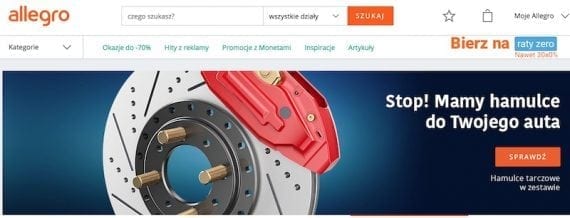
Allegro

Allegro

Asos is a U.K-based marketplace that targets younger shoppers. It sells over 80,000 products and also has marketplaces in Australia, U.S., France, Germany, Spain, Russia, and Italy.

Cdiscount is a French marketplace with roughly 1 million unique daily visitors. It sells products across a broad range of categories with over €2 billion in annual sales.

Cel is a Romanian marketplace that sells over 50,000 products to roughly half a million customers. Retailers can sign up for free.

DaWanda is a U.K.-based marketplace for handmade goods. Over 320,000 designers sell their creations on the site. Products can also be customized.

Emag is the largest ecommerce site in Romania with thousands of daily customers. Retailers can sign up for free.

Flubit is a U.K.-based marketplace. It’s known for competitive pricing. It has over 60 million products and allows sellers to integrate their product catalogs.

Fnac is a French marketplace that sells a wide assortment of products to millions of customers. It also has physical stores in France and other countries and has integrated the omnichannel experience.

Fruugo is a U.K.-based marketplace in 32 countries. Sellers can register once to sell across these countries. The site supports 21 currencies and 17 languages.

Game is U.K. based and focuses on selling games, toys, and media products. The site has grown dramatically in the last few years. It processes thousands of orders every month.

Mobile.de is a German marketplace for selling vehicles to businesses and consumers. The site has customers from throughout Europe.

Okazii is an 18-year-old Romanian marketplace. It sells over 3,000 products daily and receives roughly 3 million monthly visitors.

OnBuy is a U.K.-based marketplace that attracts shoppers by offering affordable prices. It charges low fees to sellers.

Otto is a popular German marketplace. It launched in 1995. Nearly half of the residents in Germany have shopped on the site. Merchants can target the German market, but the product information needs to be localized.

PriceMinister is a French marketplace owned by Rakuten. It is reportedly the fifth most visited ecommerce site in France. Its seller program enables easy setup with no long-term contracts.

Real.de is a German marketplace that sells millions of products in categories such as electronics, toys, home and garden items, fashion, and furniture. Merchants can sell on Real.de or, alternatively, send shoppers to the merchants’ own sites.

Tesco is the online marketplace of the U.K. grocery giant Tesco. The company introduced the marketplace model a few years back. It has been very successful. Tesco carefully vets all merchants.

Zalando is a German marketplace that has expanded to multiple countries in Europe. It initially attempted to replicate Zappos (the U.S. footwear site) but has since evolved into one of the largest ecommerce portals in Europe. It has over 22 million customers and sells over 250,000 products representing 2,000 merchant brands.

South America

Americanas is a Brazilian online marketplace with roughly 500,000 products and 10 million customers. The site has over 20,000 marketplace sellers — B2C and B2B. Its parent company also own Submarino (below).

Americanas

Americanas

Casas Bahia is a Brazilian marketplace with over 20 million monthly visitors. It mostly sells furniture and home appliances. The company also has a large physical presence and runs 750 brick-and-mortar stores across Brazil.

Dafiti is a Latin American marketplace with millions of unique monthly visitors. It is newer than other marketplaces, but it has grown quickly. It offers tools to sellers for onboarding and general success.

Extra is a Brazilian marketplace that receives almost 30 million visitors per month. It works closely with other marketplaces. The site is owned by Cnova, which operates physical stores, providing Extra’s customers with an omnichannel experience.

Linio is an online marketplace with a presence in eight Latin American countries: Mexico, Panama, Venezuela, Colombia, Ecuador, Peru, Chile, and Argentina — representing roughly 300 million potential customers. Linio has over 3 million products and 10,000 sellers. It has roughly 50 million monthly visitors.

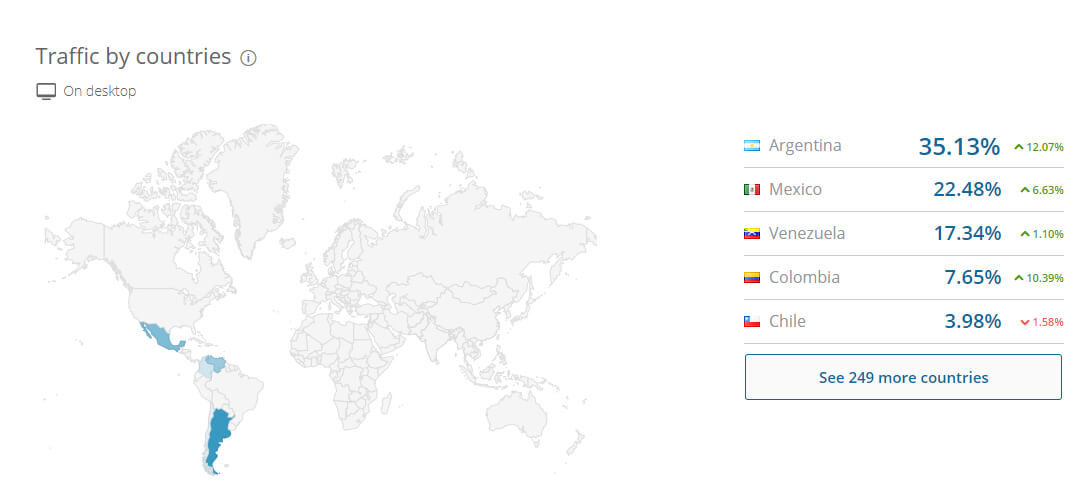
Mercado Libre is the largest marketplace in Latin America. It receives approximately 150 million monthly users and operates in Argentina, Bolivia, Brazil, Chile, Colombia, Costa Rica, Dominican Republic, Mexico, Ecuador, Guatemala, Honduras, Peru, Panama, Portugal, Uruguay, and Venezuela.

Submarino is a popular Brazilian marketplace that sells products across many categories. It is part of the company that owns Americanas. Merchants can benefit from a similar seller process on both sites.

Asia

Alibaba is the giant Chinese B2B marketplace. It has customers in 200 countries buying over 100 million products across 40 different categories.
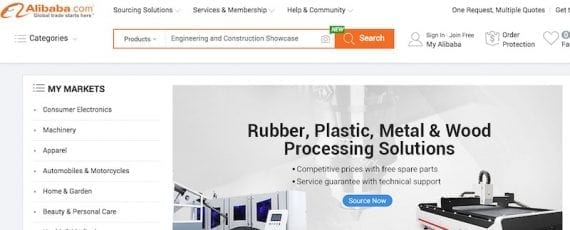
Alibaba

Alibaba

AliExpress is an Alibaba-owned marketplace that targets buyers outside China. It has a global English site and supports 15 other languages: Russian, Portuguese, Spanish, French, German, Italian, Dutch, Turkish, Japanese, Korean, Thai, Vietnamese, Arabic, Hebrew, and Polish.

Flipkart is India’s largest marketplace with over 10 million customers buying from roughly 100,000 suppliers. Flipkart’s logistics network helps sellers deliver their products faster. It also provides funding to sellers. Walmart recently purchased a controlling interest in Flipkart.

GittiGidiyor is a Turkish marketplace owned by eBay with 60 million monthly visits and nearly 19 million registered users. It sells over 15 million products across 50 different categories. A large percentage of orders come from mobile users.

HipVan is a Singapore-based marketplace that sells home furnishings. Roughly 90,000 consumers have purchased from the site.

JD.com is a Chinese marketplace with over 300 million users. It also has a presence in Spain, Russia, and Indonesia. It is one of the largest marketplaces in the world with thousands of suppliers and its own logistics infrastructure.

Kaola is a Chinese marketplace that is part of the NetEase group, a China-based technology company. Kaola is a popular cross-border shopping platform in China. Sellers can set up a store on Kaola, or they can sell wholesale to Kaola, which then resells to consumers.

Lazada, a marketplace owned by Alibaba Group, operates in Indonesia, Malaysia, Philippines, Singapore, Thailand, and Vietnam. Lazada has thousands of merchants, generating roughly $1.5 billion in annual sales.

Qoo10 is a Singapore-based marketplace. It also operates in China, Indonesia, Malaysia, and Hong Kong. Anyone registered to buy on Qoo10 can also become a seller. Qoo10 is paid only after a sales transaction is completed.

Rakuten is a giant Japanese marketplace that sells over 18 million products. It has served over 20 million customers. It also has a presence in the U.S.

Shopee is a Southeast Asian marketplace operating in Singapore, Malaysia, Thailand, Taiwan, Indonesia, Vietnam, and the Philippines. It offers more than 180 million products. Merchants can easily register online or via the mobile app.

Snapdeal is an Indian marketplace with over 300,000 sellers and 35 million products. Sellers must be registered businesses in India.

Souq is a marketplace based in the Middle East and owned by Amazon. Millions of customers shop on the site each month.

Taobao is a Chinese marketplace owned by Alibaba. It has 600 million active users — the largest in the world — and over a billion products for sale. Selling on Taobao is easier for retailers that have a presence in China.

Tmall is a Chinese marketplace, also owned by Alibaba, that sells branded goods to customers in China and the surrounding countries. It, too, is one of the largest ecommerce marketplaces in the world with roughly 500 million users and many thousands of sellers.

VIP.com is a Chinese marketplace that focuses on flash sales. It has roughly 60 million active users and more than 20,000 brands. Retailers from outside China can sell on this marketplace.

Africa

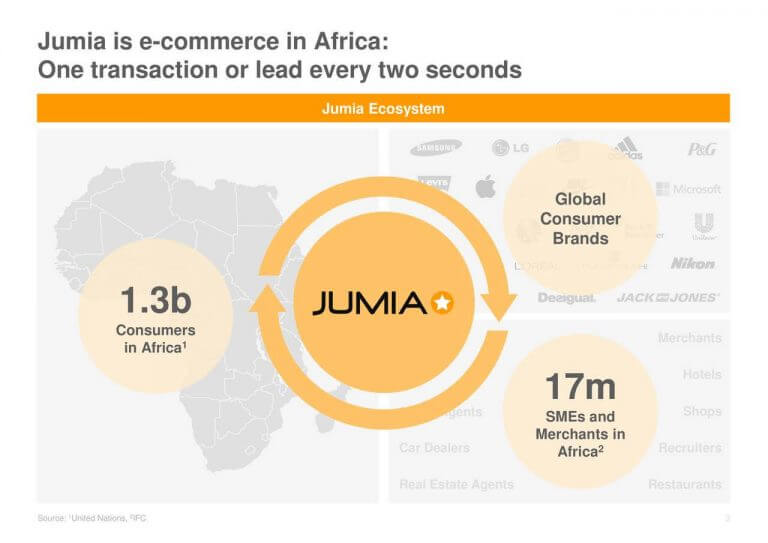
Jumia is an African marketplace operating in 14 countries representing 1.2 billion potential customers. It has roughly 50,000 sellers. It is the largest marketplace in Africa, covering approximately 80 percent of the African internet population.
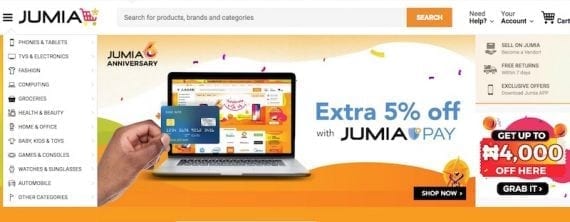
Jumia

Jumia

Kilimall is a marketplace that operates in Kenya, Nigeria, and Uganda. It has thousands of sellers targeting over 200 million consumers. The marketplace sells products only in English, making it easier for sellers to create product copy once and sell in all three countries.

Konga is the largest marketplace in Nigeria. It has thousands of sellers and roughly 50 million buyers. Sellers can store their products in Konga’s warehouse to enable faster delivery to customers, similar to the Fulfillment by Amazon model.

Australia

The Iconic is a marketplace operating in Australia and New Zealand. It launches 200 products daily and targets mostly younger females.
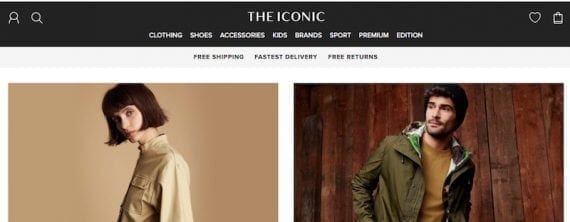
The Iconic

The Iconic

MyDeal is an Australian marketplace with 200,000 products across over 2,000 categories. Sellers must pass a product quality check before they can participate.
21 Top Online Marketplaces You Can Actually Make Money on Today

posted in: News, Uncategorized 0

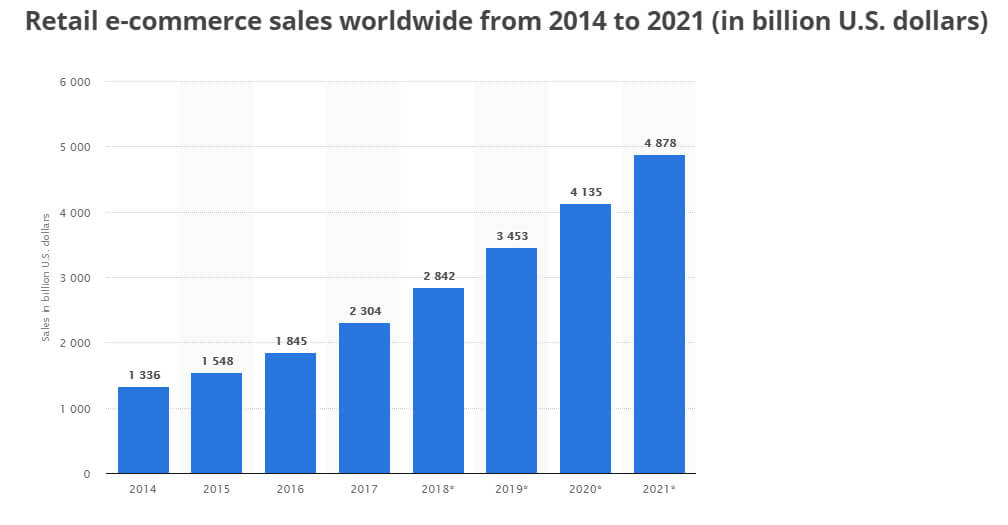
Most people who sell online are familiar with eBay and Amazon but aren’t there other marketplaces to sell on? If you are reading this article I am sure you are a person who likes to explore what other opportunities exist beyond your so-called ‘four walls’. In 2017, global eCommerce retail sales amounted to $2.3 trillion and the projection is that by 2021 it will reach $4.88 trillion. Shopping on the internet was one of the most popular online activities globally, in 2016, in China alone an estimated 19% of all retail sales occurred via the internet. (Source: Statista)

retail ecommerce growth

People today who see this upward trend are hungry to learn more about other global eCommerce opportunities routinewealth. If you are a person who is keen on strategically placing yourself and your business on multiple eCommerce platforms and are ready to tackle new frontiers – this post is for you!  Here I have compiled the ultimate list (divided based on geographical region) with the top global eCommerce marketplaces that will provide you with important:

  • Information
  • Statistics
  • Key marketplace advantages
  • Insights as to who can benefit most from these sites
 

North America online marketplaces

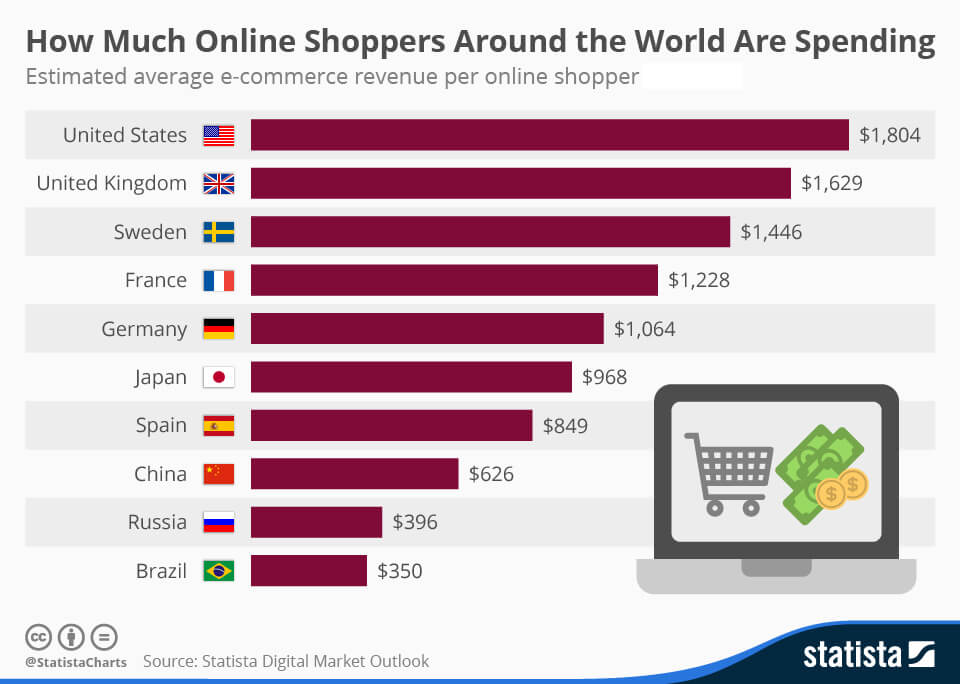
One might say that modern retail culture was born in the United States and the same would be true in terms of eCommerce. The USA is still the largest eCommerce market on the planet with revenue per online shopper from the US being the highest in the world:

ecommerce revenue per online shopper

Amazon

No eCommerce list would be complete without mentioning Amazon which is a retail outlet providing fixed prices on all products. It has 12 global sites but is especially popular in:

  • The USA
  • UK
  • Germany
  • Italy
  • France
  • Japan
  • Spain

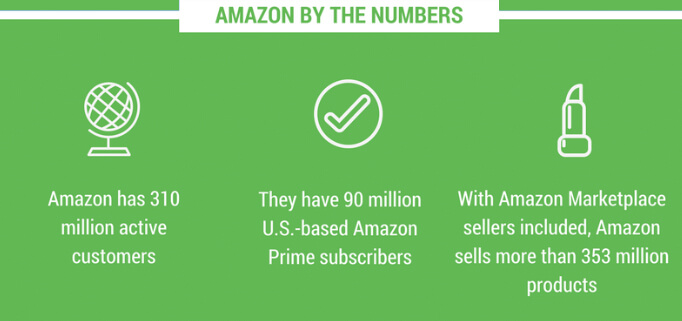
Amazon is a great option for merchants looking to get global exposure especially in the markets I mentioned above. Amazon has one of the largest customer bases, weighing in at 310 million active users with one of the largest variety of products available with over 353 million products for sale.

One unique service which Amazon offers is FBA or fulfillment by Amazon which allows sellers to send in their items to an Amazon warehouse and allow Amazon to handle everything from shipping to customer service for a fee.

Important metrics:

amazon numbers
  • Number of active users: Latest reports show that Amazon has 310 million active users and 90 million Prime members
  • Seller fees: Amazon’s seller fees are  on average  7-15% of an item’s value
  • Monthly fee: When selling using a professional account you pay $39.99 per month, if you are selling as an individual you pay $0.99 per item sold with no extra monthly fees
  • Number of page views per month: 2.6 billion

(Source: Channel)

eBay

eBay is also one of the biggest eCommerce websites out there with 23 international sites and a presence in over 100 countries worldwide – in 2017 alone, eBay’s 6.7 million sellers sold products across190 global markets.

eBay’s business model is more one of an auction house which facilitates sales between third-party and sellers. It is a great platform for small businesses to create a stable source of revenue. It has been around for over 20 years and offers:

  • New
  • Used
  • Unique items

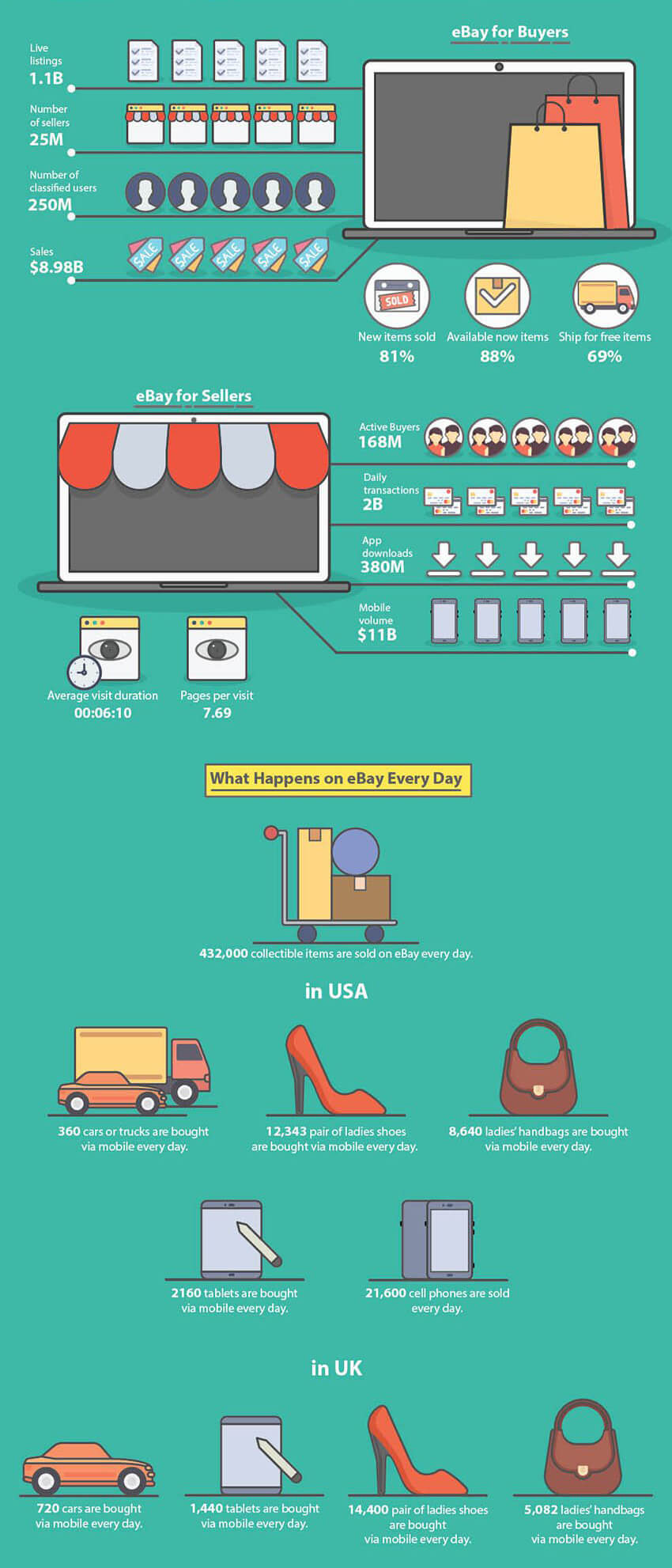
For sale. It started off as a platform primarily for used products but has evolved – most people will be shocked to learn that 81% of products currently being sold on eBay are brand new, sold mostly by small and medium sized businesses looking to expand beyond their own websites and brick & mortar establishments. (Source: Small Business Trends)

ebay online marketplace

Important metrics:

  • Number of active users: 175 million
  • Seller fees: When you sell an item through an auction or fixed price sale, eBay takes a Final Value fee which is 10-12% on average. (For a more in depth explanation, check out: eBay Seller Fees Explained – The Complete eBay Fee Calculator Guide)
  • Monthly fee: None
  • Number of page views per month: 1.2 Billion

Walmart

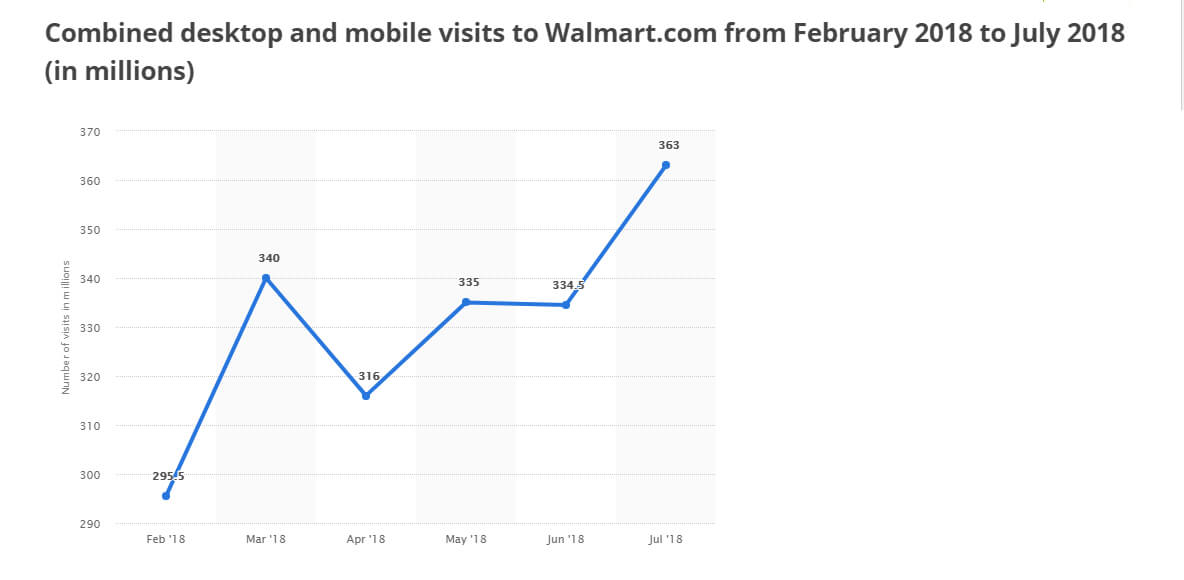
With a whopping 363 million desktop and mobile visitors to Walmart.com from February to July 2018, this website is one of the leading brands in America and growing.

walmart visitors growth

In the past, this platform was exclusive to US-based sellers but Walmart is slowly opening the floodgates to sellers from other countries such as:

  • China
  • Canada
  • The UK

The caveat: International sellers can join Walmart by invitation only and they are very specific in what they are looking for. They want sellers who:

  • Carry brand names
  • Provide excellent customer service
  • Have a large variety of products
  • Fulfill orders reliably
  • Have competitive prices
  • Have a US mailing address and W9 tax form
  • Have the ability to ship from a private US location (not FBA)
  • Are able to accept international returns

Important metrics:

  • Number of active users: 363 million
  • Seller fees: 8-15% Commission  
  • Monthly fee: None
  • Number of page views per month: 344 million

Sears

Sears which is somewhat similar to Amazon in the sense that they have their own brand and a ‘Fulfilled by Sears’ option. They also cater to third party sellers both locally and internationally. The bricks & mortar end of the company has taken a big hit as of late and has been forced to close 150 Sears and Kmart stores in 2018, leaving them with approximately 1,250 stores in the continental US.

On the bright side:

  • Sears attracts 16 million monthly online visitors
  • Has over 75 million Shop Your Way rewards program members (similar to Amazon Prime) who made $2 billion in purchases in 2016
  • Sears offers you detailed analytics and reporting so you can follow your item’s progress
  • Sears has a fulfillment program which costs $40 a month and may make your life easier as they take care of shipping and delivery  
  • The Sears name instills trust in shoppers and thus can help your business

(Source: CED Commerce)

Important metrics:

  • Number of active users: Over 130 million active members
  • Seller fees: 6.5-14.5% commission
  • Monthly fee: $39.99
  • Number of page views per month: 27.7 million

Jet

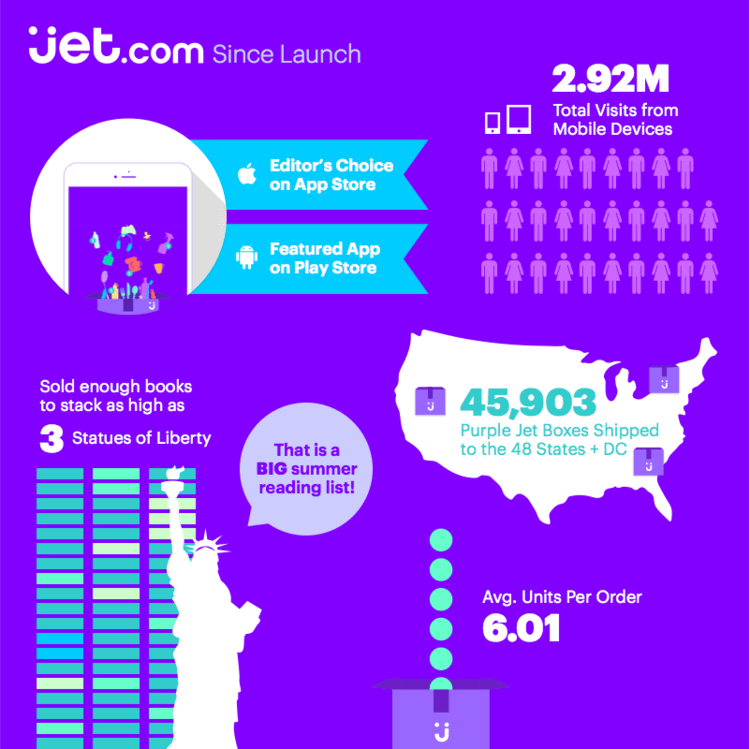
Jet.com is a relatively newly (July, 2015) launched eCommerce site based in the USA and is growing rapidly and has a GMV or Gross Merchandise Volume ie dollar value of total merchandise sold estimated at $20 billion in 2020. With over 4 million customers, Jet has a unique approach to eCommerce – they have an algorithm which offers shoppers discounts on items as they shop- the more you buy, the more you save. This is a new model called dynamic pricing and it has got many American’s attention. (Source: ecomdash)

The upside: Most products have one, flat 15% fee

The downside: Getting accepted and vetted as a retailer is a lengthy process but it may be worth your while.

Interesting fact: Jet was just purchased by Walmart for $3 billion meaning one of America’s largest retail chains is betting big bucks on this young stallion’s success.

jet online marketplace

Important metrics:

  • Number of active users: Over 4 million active users
  • Seller fees: 5-15% commission
  • Monthly fee: None
  • Number of page views per month: 10.3 million

Bonanza

Bonanza was established in the US and has been trying to rival eBay for years but is still the much smaller cousin. It is a marketplace which is considered ‘friendly’ to sellers and has over 10 million items for sale. Its main marketplaces include:

  • Canada
  • U.K.
  • France
  • India
  • Germany
  • Mexico
  • Spain

At its core, Bonanza’s goal is to create an easy platform where sellers can create eCommerce websites hosted by Bonanza. The clear advantages of this site include:

  • No listing fees and no monthly store fees!
  • Much higher profit margins when compared with other markets – with the average fee per sale weighing in at a measly 3.5%!
  • Bonanza also has the option for you to create your own unique webstore. Usually other eCommerce sites have this too but they often hog the branding. With this platform you will be able to hone your individual brand identity.  

Important metrics:

  • Number of active users: 2.2 million
  • Seller fees: 3.5% post sale
  • Monthly fee: No monthly store fees
  • Number of page views per month: 7.2 million

Wish

With revenue set to hit the $2 billion mark this year Wish is gaining a lot of traction in the marketplace and buzz on the news. The eCommerce startup which was founded in 2010 specializes in discounts and mobile shopping. Ever since its founding, it has doubled its revenue every year and CEO Peter Szulczewski says they are right on track to repeat these breathtaking results in 2018.

Wish also has an impressive merchant base of 1 million, selling over 200 million items. Their unique business model is based off of heavily discounting products which at times can include up to 90% in discounts. The way they are able to achieve this is by:

  • Buying directly from manufacturers
  • Having month-long shipping windows

Wish has been so successful that both eBay and Amazon have launched special sections of their website (Amazon’s “$10 & Under” and eBay’s “Under $10.”) aimed at specifically competing with Wish’s discount prices. (Source: Business Insider)

Important metrics:

  • Number of active users: 75 million active monthly users
  • Seller fees: 15% of the item + shipping’s value
  • Monthly fee: None
  • Number of page views per month: 92.9 million

OfferUp

Is a very popular mobile-only eCommerce application with an estimated $20 billion in transactions. According to OfferUp statistics, the average user spends 16 minutes on their app – by comparison, the average spent on the most popular desktop eCommerce sites is 14 minutes and people spend only 12 minutes on eBay’s app. The rule is that the longer people stay on an app or site, the higher the chance for a purchase or multiple purchases – you can see the probability for sales grow on OfferUp.

The clear advantages of this app include:

  • Intuitive and easy to use interface
  • It is based off of endless scrolling where half of the next image is hidden so that customers are constantly tempted to keep on shopping
  • It is safer as identities are verified by scanning in user’s driver’s license at online slots

(Source: DMR Business Statistics, Mark Schaefer)

Important metrics:

  • Number of active users: 42 million
  • Seller fees: 7.9 % on average per transaction
  • Monthly fee: None
  • Number of page views per month: 19.4 million
 

United Kingdom online marketplaces

The UK has been considered the third largest eCommerce market globally since 2015 and as such deserves its own independent section. In 2017 the sales of the largest online retailers in the UK reached a subtotal of 80 billion USD. (Source: Statista)

Do note that many of the companies mentioned above such as:

  • eBay
  • Amazon
  • Bonanza

All operate in the UK as well. The following eCommerce platforms are exclusively British:

GAME

GAME as t, as the name implies,he perfect platform if you are selling:

  • Games
  • Media
  • Computers hardware
  • Toys
  • Collectibles

It is only around for a few years but it has seen some major growth including:

  • A 250% year-on-year increase in sales
  • Processing 12,000 monthly orders from 250 retailers

The main upsides include:

  • No set-up costs
  • No listing fees
  • No subscription fee

Important metrics:

  • Number of active users: 4 million
  • Seller fees: 6-15 %
  • Monthly fee: None
  • Number of page views per month: 6.4 million

Flubit

Flubit is the largest UK owned and based marketplace for branded good. Over 1 million items are available on a weekly basis and is considered the British Amazon but cheaper.

The main draw of this marketplace is zero fees or commissions!

Flubit is unique in its model as a market disruptor – it offers shoppers a simple service, once you are ready to purchase an item on Amazon.uk you can send the link over to Flubit and they will create a unique offer for that specific product at a more competitive price. These are personalized, private offers which only exist for a short time and drive customers to action. According to Flubit’s data eCommerce conversion is typically at 3% with Flubit coming in at 30%! (Source: The Telegraph)

Important metrics:

  • Number of active users: 10 million
  • Seller fees: Zero
  • Monthly fee: None
  • Number of page views per month: 83,000 (sharp decrease compared to previous months)

Onbuy

Founded in 2016, they operate in 36 countries and it is a great place to start launching your products both in the UK and Europe. They have a large variety of products on offer from vehicles to flowers so you won’t have any limitations as far as categories go.

A word from the company:

“The concept is simple: low fees for sellers mean savings for you whatever you’re buying. We offer everything from pet supplies and homeware to beauty and toys – prepare to be spoilt for choice! We also offer OnBuy Deals, a newly launched platform where we work with our sellers to find you the best bargains across the market. You’ll find massive discounts on an array of products.”

It is worth mentioning that this is a purely third-party based platform as Onbuy does not compete with sellers with their own brands.

Important metrics:

  • Number of active users: 300,000
  • Seller fees: 5-9%
  • Monthly fee: 19 British Pounds
  • Number of page views per month: 278,000
 

Europe online marketplaces

According to recent figures, eCommerce is experiencing positive growth trends in all the major European countries which is resulting in one of the most dynamic and fastest growing eCommerce markets in the world. (Source: Statista)

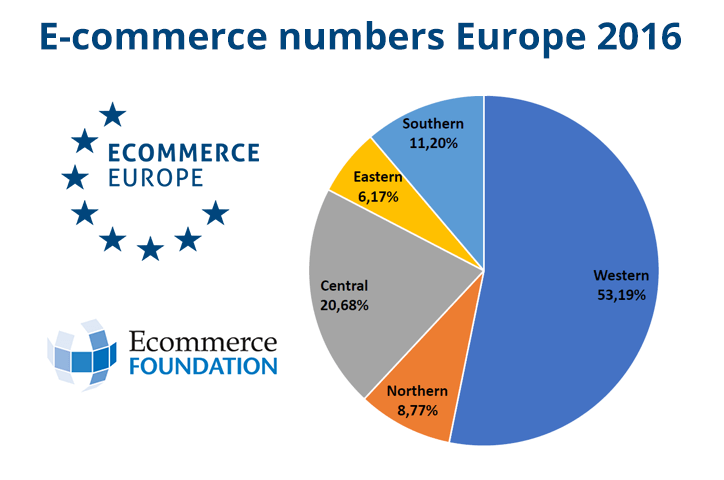
Western and Central Europe combined account for over 70% of eCommerce on the continent, while Northern and Southern Europe account for nearly 20%:

europe ecommerce marketplaces

Cdiscount

Is one of the biggest eCommerce sites in France with over 11 million unique monthly visitors and 40 different product categories from fashion and shoes to electronics and sports gear.

The advantages include:

  • A highly developed distribution network around France including 18,500 pick-up points
  • A Cdiscount fulfillment option similar to Amazon’s FBA
  • Competitive fees

The numbers:

  • €3.4 billion turnover in 2017
  • Over 2 million visitors each day
  • 30 million products
  • 8.6 million active customers in 2017
  • 1 800 employees
  • 500 000 m² of warehouses
  • 60% of business done over mobile
  • Over 60 different jobs represented

(Source: Groupe Casino)

Important metrics:

  • Number of active users: 7.7 million
  • Seller fees: 5-20%
  • Monthly fee: 39 Euros
  • Number of page views per month: 69.4 million

Fnac

Fnac which was launched in 1999 is also a big French eCommerce site which has 15 million unique monthly visitors. Most of its sales are in France with a small number of sales in Belgium.

The two major seller benefits here include:

  • Sales and marketing assistance
  • Technical support

Some interesting numbers:

  • In 2017 Fnac had $638.4 million
  • 75% of revenue generated on the site is from the Electronics & Media category

(Source: ecommerceDB)

Important metrics:

  • Number of active users: 10 million
  • Seller fees: 8-12%
  • Monthly fee: 39,99 Euros
  • Number of page views per month: 33.5 million

Allegro

Allegro is the 5th largest marketplace in Europe as a whole, one of the top sites in Eastern European countries and the largest eCommerce marketplace in Poland. Founded originally in Poland, the company has 14 million unique local visitors, the majority of which make regular purchases.

eBay failed miserably when it tried to launch in Poland in 2005 and Amazon has not even tried most likely due to eBay’s blunder.

The most likely explanation for this anomaly is Allegro’s early market launch in 1999 which secured market dominance. Have a look at some interesting numbers:

  • 75 percent of participants in a recent survey mentioned Allegro first as an eCommerce marketplace
  • The awareness of Alegro as a brand is currently at 98%
  • For 81% of Polish internet users, Allegro is the number one choice for online shopping

Seller benefits include:

  • Marketing and advertising support
  • A personally assigned support agent

(Source: Ecommerce News Europe)

Do keep in mind that listings must be translated into Polish which may add to your expenses. Also you must have a Polish website if you want to trade on Alegro.

Important metrics:

  • Number of active users: 9 million
  • Seller fees: 2-10%
  • Monthly fee: None
  • Number of page views per month: 219 million
 

Asia online marketplaces

The major commerce and eCommerce powerhouse in Asia is clearly China. Since 2015, Chinese companies have made major strides in catching up with their American counterparts. This market has generated 250 billion US dollars in online sales and is on track to overtake the USA in the coming years.

Key contributing factors include:

  • The increasing spread of the internet in China
  • An ever growing middle class with increased spending power
  • The introduction and expansion of Alibaba Group

(Source: Statista)

Alibaba

Is the biggest eCommerce platform in China with about 80% of eCommerce in the middle kingdom and about half of all parcels belonging to Alibaba or one of its subsidiaries. The enormous conglomerate owns prominent eCommerce sites such as:

  • Taobao Marketplace which features thousand of non-brand name products sold by small unknown merchants
  • TMall is for brand name products
  • Alibaba.com
  • Alimama
  • Alipay which was turned into an independent company in 2010

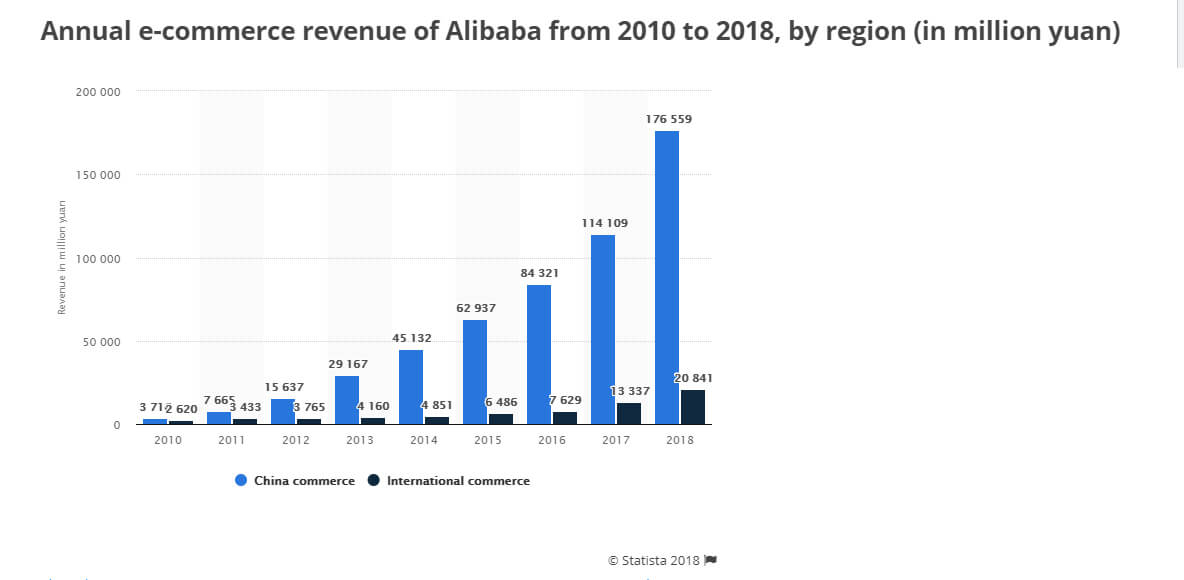
One of the company’s most profitable days was on Single’s Day which is the Chinese antithesis to the West’s Valentine’s Day – in 2015 TMall and Taobao raked in 500 million sales worth 14 billion USD.

Alibaba marketplace revenue growth

(Source: Statista)

Benefits of selling on Alibaba:

  • Access to a large number of international suppliers who sell at wholesale prices
  • You can get started for free
  • Great way to enter the Chinese market
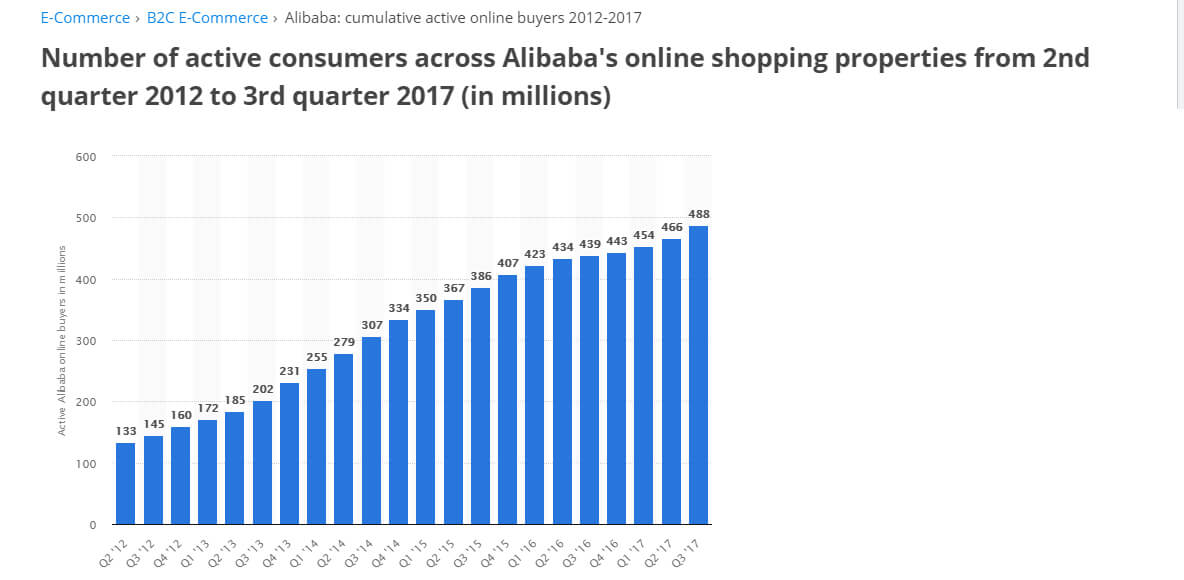
Alibaba active online buyers

Important metrics:

  • Number of active users: 488 million active buyers
  • Seller fees: 5-8%
  • Monthly fee: You can have a free membership but there are other membership levels such as Gold Supplier which will run you $2,999 for the year.
  • Number of page views per month: 126.7 million

JD

This is a great way and according to some accounts, an easier way to penetrate the Chinese market. When looking into selling with JD Worldwide you have two retail options:

  1. Resale – meaning JD will purchase your merchandise and resell it on their site independently to Chinese consumers
  2. Retail – You sell your products using the JD platform for a 2-10% fee depending on the category  

Important metrics:

  • Seller fees: 2-10%
  • Monthly fee: No monthly fee but you will pay an annual fee of $1,000 which will exempt you from having a local address or bank account in China and will benefit from the company’s marketing support as well as gaining access to JD’s national logistics network.
  • Number of page views per month: 675 million

Flipkart

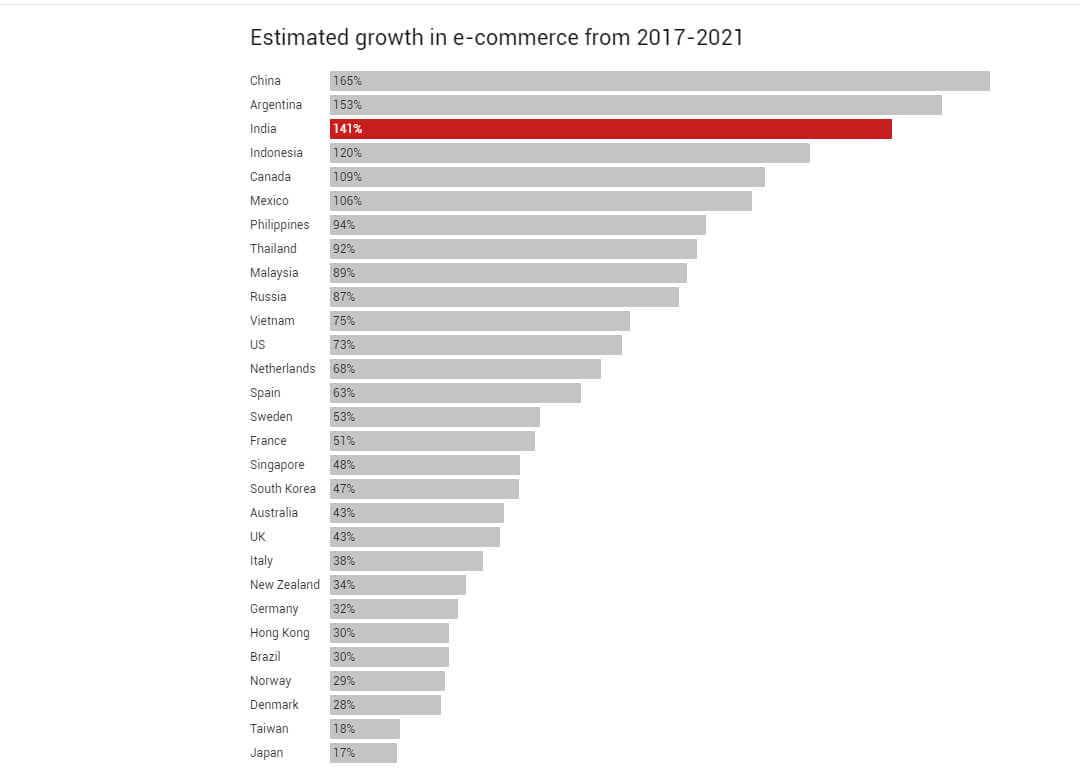
This is India’s largest eCommerce site with 65% market share which was recently scooped up by Walmart for a cool $16 billion. India is where Walmart and Amazon will hash it out for control of a major emerging market.

Now Walmart did not invest all that money for naught – online retail is expected to grow in India 141% to $50 billion from 2017-2021:

india ecommerce growth

The Advantages:

  • It is super easy to begin selling as an international seller though you will need a local address for returns
  • It is the best way to break into the Indian market

Major disadvantage:

Flipkart severely curbs your ability to sell larger items and requests special approval or involvement for many brand name products.

Important metrics:

  • Number of active users: 75 million
  • Seller fees: 5-25%
  • Monthly fee: None
  • Number of page views per month: 220 million

Snapdeal

Snapdeal which the second largest eCommerce site in India after Flipcart was actually supposed to merge with the latter but the deal fell through. Since the failure to merge, the company has decided to shift strategy gears and focus on:

  • Low priced items
  • Selling as frequently as possible
  • Targeting price-sensitive customers

And its new, albeit aggressive strategy seems to be working with orders up to 45,000 a day after reaching a low of 20,000 orders a day in 2017 while using their old Gross Merchandise Volume GMV strategy.

Sanpdeal advantages include:

  • Great logistics
  • One of the highest kilo allowances on the Indian market (60 kilo vs. Amazon which only allows 30 kilos in India and Flipkart which limits sellers to 12 kilos)

Disadvantages include:

  • Little control over your listings and their content once it is up on the site
  • Poor customer support
  • Their fulfillment program SD Plus is highly disorganized

(Source: MARKETING91)

Important metrics:

  • Number of active users: 45 million
  • Seller fees: 7-15 %
  • Monthly fee: None, No listing fee
  • Number of page views per month: 64.2 million

Lazada

Lazada first entered the market in Singapore 6 years ago when consumers were mostly focused on finding cheap deals.

A strong selling point for the largest site in South-East Asia is it’s free delivery and free returns policy.

The site, which is currently also owned by the Alibaba corporation and has followed suit by adding physical pickup location in Singapore where customers can also try on newly purchased articles of clothing and make returns and swaps.

“Another challenge lies in the physicality of retail – it encourages human interactions and grants immediate gratification to buying of goods,” explains Erik Ligtenberg, Deputy Chief Executive Officer. “We have since expanded our offerings with click and collect lounges at all CapitaLand malls, and improved our app that allows shoppers to connect directly with sellers in real-time, as if they’re talking to them in person.”

This is a very interesting phenomenon which is gaining traction the world over – hybrid online offline retail has a future, just remember that it began in Singapore.

(Source: The Drum)

Important metrics:

  • Number of active users: 5.3 million
  • Seller fees: 2% of the unit price on average
  • Monthly fee: None
  • Number of page views per month: 24 million

Rakuten (Japan)

This is the hands down, the single largest eCommerce platform in Japan with 80% of the entire local population making purchases via the platform and is the fourth largest eCommerce platform in the world. What makes them stand out is that each merchant receives their own space which can be uniquely designed and branded.

The site’s key operating principle is based on a Japanese concept called ‘Omotenashi’ which encourages offering high quality and personalized service. This approach means that Rakuten allows for a more direct relationship between buyers and sellers and encourages each seller to create a unique user experience.

Important metrics:

  • Number of active users: 105 million
  • Seller fees: 8-12 %
  • Monthly fee: JPY 19,500 (roughly $175)
  • Number of page views per month: 16.4 million
 

Africa online marketplaces

Africa which is such a small market is typically grouped together with the Middle East. Here are some regional statistics:

  • eCommerce revenue hit roughly $20 million in 2018
  • By 2022 there will be a growth rate of 11% amounting to almost $32 million
  • The largest part of the market is dominated by Electronics & Media at $6 million in sales in 2018
  • The average revenue per user is $209 at present

(Source: Statista)

Jumia

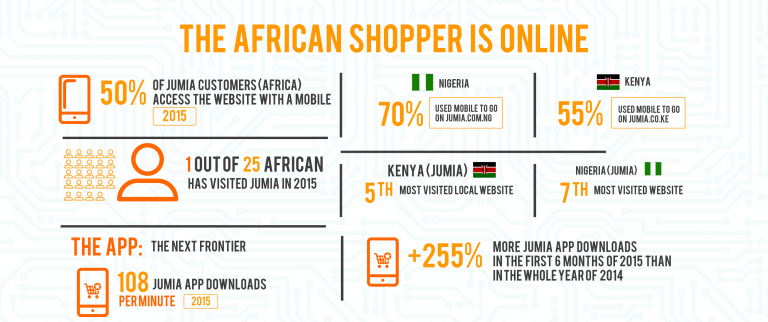
Though operating in a small market and dominating the African eCommerce scene, Jumia has high hopes for the future to tap this market which has immense potential. The African continent has 54 independent countries and 1.3 billion consumers and 17 million SMEs and merchants.

jumla online marketplace

Founded in 2012, the company started off by selling items exclusively in the electronics and fashion departments. It is a market leader specifically in:

  • Egypt
  • Ivory Coast
  • Nigeria
  • Kenya
  • South Africa
  • Morocco

It is safe to say that it has overpowered its competition ie Kilimall and Konga.That is not to say the African eCommerce market which only accounts for 0.5% of the retail market share doesn’t have its own challenges including:

  • A severe lack in vendor trust
  • A lack in computer skills
  • Africans have are late adopters of the ‘cashless society’ concept and are slow to adopt credit cards, PayPal and other forms of ‘digital’ or ‘virtual’ currency

(Source: ecommerce IQ)

african ecommerce

Important metrics:

  • Number of active users: 162 million
  • Seller fees: 2.5-20%
  • Monthly fee: None
  • Number of page views per month: 3.6 million
 

South America online marketplaces

In 2019, expect to see dramatic growth on the Latin American continent as far as eCommerce goes – 2016 saw 126.8 million Latin American shoppers and the 2019 projection is 155.5 million. Relatively speaking this market is small when compared with behemoths such as North America and Asia Pacific but is still expected to grow from $49.8 billion in 2016 to $79.7 billion in 2019. From a regional perspective, Brazil is the clear market leader with $16.55 billion in fiscal year 2016 followed by Mexico at $7.19 billion and Argentina at $5.1 billion. (Source: Statista)

Mercado Libre

Mercado Libre is the market leader in South America including:

  • Argentina
  • Brazil
  • Chile
  • Colombia
  • Costa Rica
  • Ecuador
  • Mexico
  • Peru
  • Uruguay
  • Venezuela
mercado libre traffic by country

And is the perfect place to start your South American commerce journey.

Two facts about Mercado Libre:

  1. It is the 8th most visited internet retail site in the world
  2. It generates 4,000 search queries per second

You can also open up a Mercado Shop which is a personalized retail area on their platform and much like Alipay, they too operate their own independent payment processing service called MercadoPago.

Important metrics:

  • Number of active users: 160 million
  • Seller fees: 10-16%
  • Monthly fee: None
  • Number of page views per month: 31.5 million
 

Summing it up

As you can see the world of eCommerce is much broader than just eBay and Amazon and many opportunities are just on the horizon waiting to be tapped. The developing world has some fantastic opportunities and even developed countries which are known for slower growth and sometimes smaller margins have some very interesting eCommerce startups aiming to revolutionize online retail. Use this list wisely and don’t be afraid to get your feet wet, hone in on one market or platform which really peaked your imagination and start getting a feel for the market. As they say, If you never try, you will never know and if you try and fail then try, try again.

Please share your eCommerce pioneering experiences with the community and let us know if their are any other intriguing platforms out there that I may have overlooked.

 
Co-founder and CMO of CrazyLister – the world’s leading eBay listing software. 2x eBay award recipient for excellence in sales and highest conversion rates. Started my journey in eCommerce back in 2008, grew an online business from zero to $4.5M in sales and never looked back.

Alternative Marketplaces at Home and Worldwide: Roundup 2019

posted in: News 0

Found on: https://www.webretailer.com/lean-commerce/alternative-marketplaces-roundup/

It’s not all about Amazon and eBay. Here are our best articles on alternative marketplaces both domestically and all around the globe.

Selling Internationally? Look Beyond Amazon and eBay

One of the biggest challenges for online sellers is deciding on the right platform to sell their products. For many, there will be a natural inclination towards one of the heavyweights – Amazon or eBay. Both have their merits and downfalls as we discussed in our recent article on eBay vs Amazon.

But why put all your eggs in one basket? “Alternative” marketplaces are making an impact all around the world. In the U.S., niche players such as Etsy and Reverb have emerged, and internet giants Facebook and Google have launched their own business-friendly marketplaces.

In many other countries, including Japan, China, India and Brazil, ecommerce has long been dominated by online marketplaces other than Amazon and eBay.

So, in this roundup I’ve pulled together our best posts on alternative marketplaces in the U.S. and across the world.

Amazon and eBay alternatives

Competition on Amazon is always intense and even borders on the downright dirty, with sellers frequently being closed down or suspended. In this article we look at seven Amazon alternatives, including Walmart, Jet.com, Newegg and OnBuy.

7 Amazon Alternatives: Best Marketplaces To Help You Diversify Your Sales

eBay sellers are paying more in fees, struggling to keep up with ever-changing policies and battling with technical problems like site outages and random testing. In this article we look at ten eBay alternatives, including Bonanza, DaWanda, eBid, Etsy, Ruby Lane and GunBroker.com.

10 eBay Alternatives: The Best Seller-Friendly Marketplaces To Consider

Alternative marketplaces in the U.S.

Here are some of our best articles on marketplaces local to the U.S. Some may expand globally in time, but for now their focus is on the States:

Selling new or used clothes online can be a profitable niche. There are now a multitude of apps and websites used by professional clothing sellers, each with their own loyal base of fashion-conscious buyers. This article covers some alternative marketplaces for selling clothes, and outlines the key features of each.

Which Are the Best Places to Sell Clothes Online?

Alternative marketplaces worldwide

The world is your oyster when it comes to selling internationally. But consumer habits differ around the world, and research is key in order to make the most of your efforts.

Here are some of our best articles covering international marketplaces and ecommerce around the world:

Europe

Asia

Elsewhere

What does the future hold?

There’s still a lot to come in the development of online marketplaces around the world. Just this week Mirakl, a company with software which enables companies to run their own ecommerce marketplaces, raised $70 million to grow beyond its current 200 customers in 40 countries.


What’s coming next? One in four households now own a voice-controlled assistant, and shopping through social media is a trend with massive potential. This article discusses various ways to get your product to the consumer using diverse new channels such as Amazon Vendor, social shopping on Facebook and Instagram, and voice search with Amazon Echo and Google Home.

Multi-Channel Retailing in 2018: More Channels, More Challenges

In this post Linda Chew discusses the factors that retailers must consider when approaching multichannel selling, including marketplace policies, hosting fees, operational complications, and different buying behaviors.

Multichannel Selling Through Online Marketplaces: Present and Future

That’s everything for this roundup! Let me know in the comments if there’s something you would like to see covered next.

1 2 3 4 5