Amazon Regional Sales Distribution: What Sellers Should Know
Insights
Amazon’s marketplace opportunity is global, but its reported revenue base is still heavily weighted toward North America. In Amazon’s 2024 results, the company reported full-year net sales of $638.0 billion. North America segment sales were $387.5 billion, while International segment sales were $142.9 billion. AWS made up the remainder of Amazon’s reported segment structure. These figures are company net sales, not seller GMV, but they are useful for understanding where Amazon’s commercial weight sits.
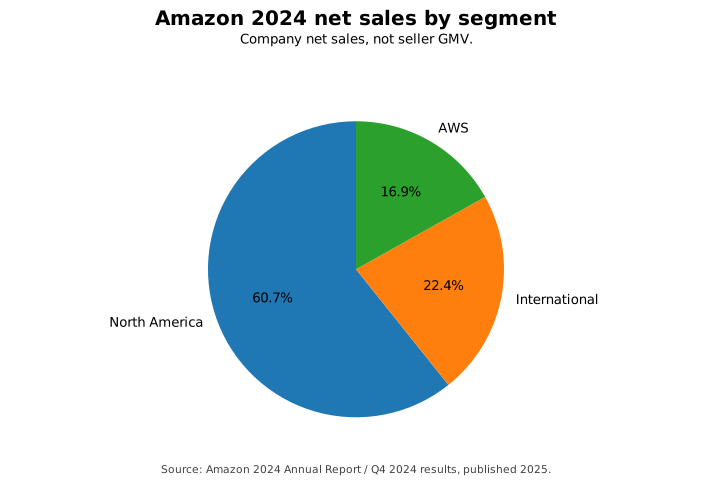
Source: Amazon 2024 Annual Report / Q4 2024 results, published 2025.
For sellers, the most important lesson is that “Amazon global” is not one market. North America, Europe, Japan, and other regions differ in VAT/tax structure, product compliance, logistics, language, return behavior, advertising competition, and payout operations. A SKU that performs well in the U.S. may need different packaging, certification, pricing, warranty terms, or fulfillment design in the EU or Japan.
Amazon’s International segment grew 9% year over year in 2024, or 10% excluding foreign exchange effects, according to Amazon’s Q4 2024 release. That growth is attractive, but it also increases complexity. International expansion creates more surfaces for catalog errors, shipment delays, return disputes, and marketplace policy issues. Sellers should not treat regional expansion as a simple listing translation project.
A practical regional operating model should answer five questions before launch: Which SKUs have enough margin after local taxes and logistics? Which products need compliance review? What inventory should be held locally versus cross-border? How will returns be inspected and recovered? How will regional performance be compared in one dashboard?
FYERP is designed around that operating reality. Through /digipassport/, Amazon SP-API data can support order, inventory, settlement, and account visibility. Through /fyerp/, sellers can build a more complete operating layer that connects Amazon activity to purchasing, warehouse, finance, and return workflows.
Amazon’s regional mix shows why disciplined data infrastructure matters. Growth is real, but profitable growth depends on turning each region into a measurable operating unit.
Sources
- Amazon.com Announces Fourth Quarter Results — Amazon Investor Relations, 2025
- Amazon 2024 Annual Report — Amazon, 2025
← Back to News