Ecommerce Category Trends: What Is Growing in 2026
Insights
Category strategy in ecommerce is changing. The strongest opportunities are not only in traditional online categories like electronics and apparel. In 2026, sellers should pay close attention to essentials, grocery-related demand, health and beauty, refurbished electronics, and categories where AI-assisted product research improves conversion.
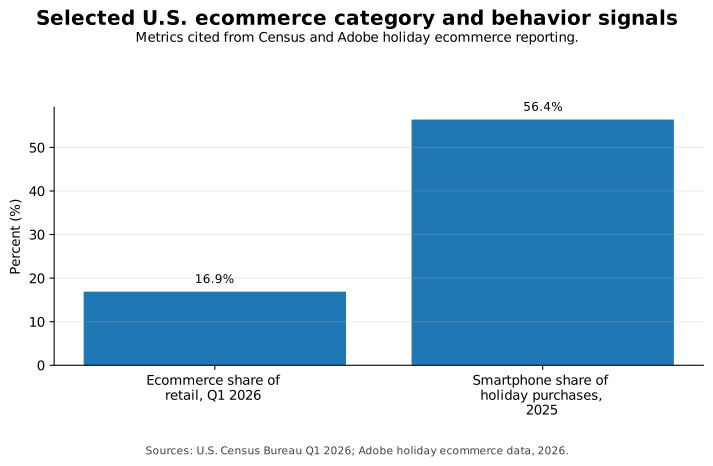
Sources: U.S. Census Bureau Q1 2026; Adobe holiday ecommerce data, 2026.
U.S. Census Bureau data showed that e-commerce represented 16.9% of total U.S. retail sales in Q1 2026. That headline number is useful, but sellers need to look below the aggregate. Categories vary widely in online penetration, return behavior, advertising cost, and fulfillment complexity.
EMARKETER’s March 2026 U.S. ecommerce category forecast highlighted food and beverage as a major driver of future ecommerce expansion, calling it the second-largest retail category and noting its continued gains online. Earlier EMARKETER category analysis also described food and beverage as one of the fastest-growing ecommerce segments, with online share rising over time. For sellers, this points to a broader trend: convenience-driven and repeat-purchase categories are becoming more digital.
Adobe’s 2025 holiday ecommerce data showed how category demand concentrates during peak seasons. Adobe reported that the 2025 U.S. holiday season reached a record $257.8 billion in online spending. Reuters, summarizing Adobe’s release, noted that electronics, sports equipment, and appliances benefited from deep discounts, while smartphones accounted for 56.4% of purchases during the period. Adobe also reported rapid growth in traffic from AI shopping assistants and chatbots during the holiday season.
The operational lesson is simple: category growth creates opportunity, but category complexity creates risk. Food and beverage require freshness, expiration, and replenishment discipline. Electronics require compatibility, serial-number tracking, warranty handling, and return inspection. Apparel and accessories require sizing and return controls. Health and beauty require compliance and condition monitoring.
FYERP helps sellers manage this complexity by connecting product, inventory, order, return, and profitability data. Sellers can use /fyerp/pricing/ to evaluate implementation options and /digipassport/ to connect Amazon SP-API data into a more structured operating workflow.
Sources
- Quarterly Retail E-Commerce Sales Report, Q1 2026 — U.S. Census Bureau, 2026
- US Ecommerce by Category Forecast 2026 — EMARKETER, 2026
- Health & Personal Care Leads Growth of US Ecommerce — EMARKETER, accessed 2026
- Adobe: Holiday Shopping Season Drove a Record $257.8 Billion Online — Adobe, 2026
- US online holiday spending hits record levels — Reuters, 2026
← Back to News